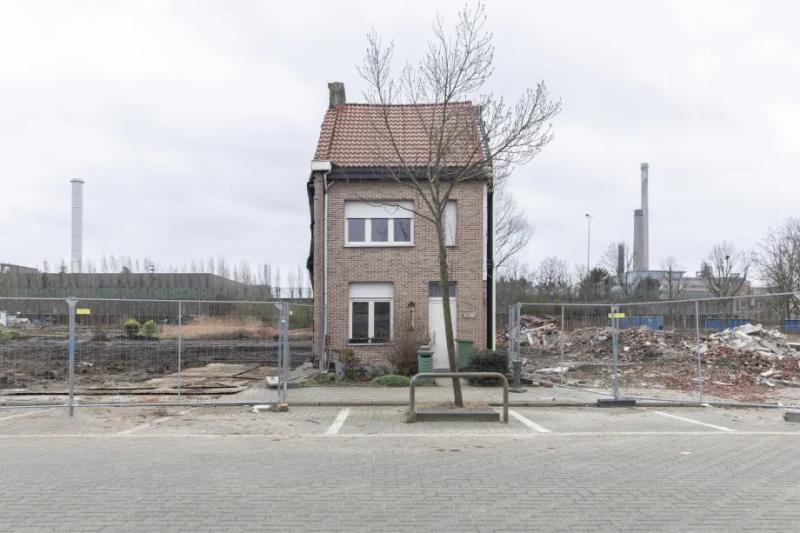
In Moretusburg, children grow up as you see in photographs from several decades ago: they draw with chalk on the streets, cycle around without fear of fast cars and play more often with the eldest son of the neighbours across the street than with their own cousin.
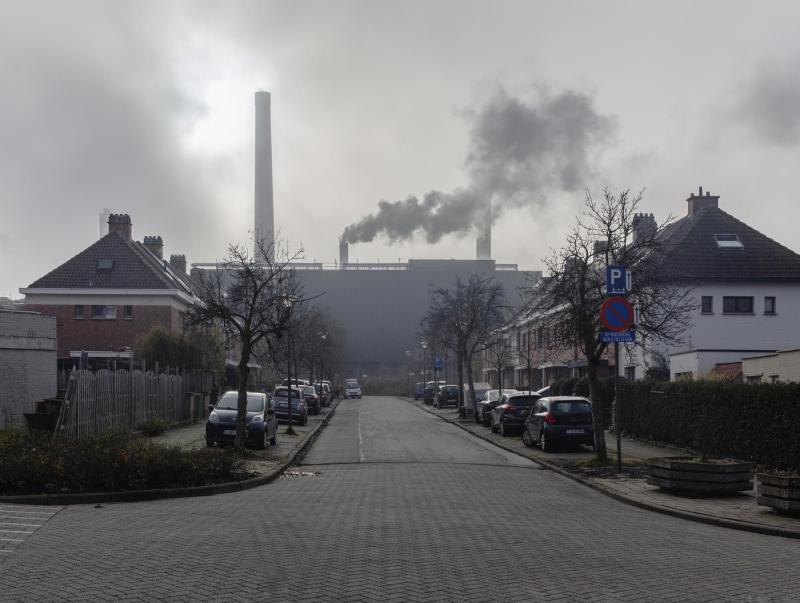
Behind Curiestraat lies the lead refinery, where one of Belgium's oldest multinationals recycles precious metals. Umicore – formerly “Union Minière” – is known in Moretusburg as “De Zilver” (The Silver). The histories of the neighbourhood and its industrial neighbour are intertwined. The workers' houses were built after the first plumes of smoke appeared, and entire families clocked in and out at “De Zilver” as their breadwinner.
The fact that where there is smoke, there is fire, was already confronted by neighbourhood residents in 1978, when cows and horses died from lead poisoning. Since then, children under the age of twelve have been tested for lead levels every six months. Anaemia, damaged intestines, psychological consequences and developmental disorders in children: lead is not good news. A reduction in emissions is necessary. Umicore is making adjustments, but the reduction appears to have its limits. In 2020, the averages peaked. Washing your hands and not growing your own vegetables is not enough.
We – Hanne Van Assche (photographer) and Fred Libert (journalist/writer) – are following this story, not just today, but throughout the entire process. We are talking to everyone, from local residents to religious communities and sports clubs to Umicore and the City of Antwerp. In this way, we are trying to present a multilateral narrative without judgement. A collective record and visual representation of change. And we are doing this without bias.
Photo's: © Hanne Van Assche