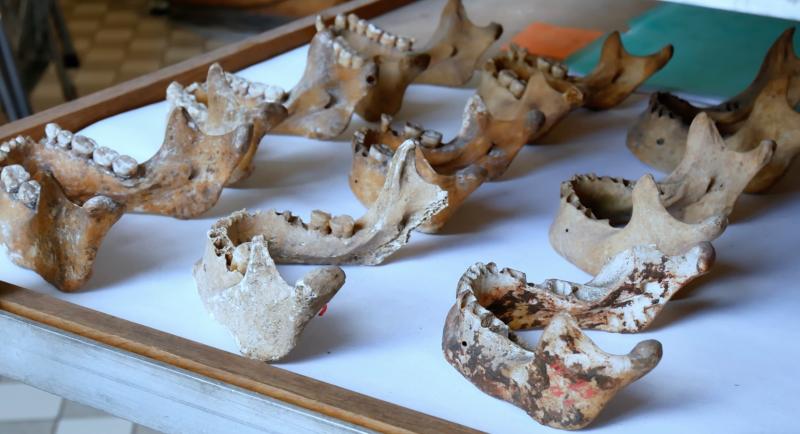
KINSHASA – Échos du Silence explores the history surrounding human remains from the Congo that have been held in Belgium since the colonial period, and addresses issues relating to provenance, restitution, the transfer of knowledge and the dignity of the dead.
Before the burglary (AI at the local police station)
AMSTERDAM / GHENT – Can a burglary be predicted before it happens? According to the ambitious Bigdatpol project at Ghent University, this will soon become a reality. Led by Professor Wim Hardyns, the research team has spent years developing an AI model that can identify areas and times of high burglary risk.
ISTANBUL / BRUSSELS – The nature of warfare is changing rapidly today. A flood of new technologies is emerging on the battlefield, including drones, robots, lasers and artificial intelligence.
LEUVEN – Over the course of six episodes, the Wonderzoekers explore some major human themes: shame, language, beauty, imagination, homesickness and lying. In doing so, Palmers and Pierlet combine scientific insights with personal stories, humour and fiction.
LIERNEUX - Europe wants to reduce its dependence on foreign supplies of key raw materials. That is why Member States are looking into what can be mined within their borders. Senne Starckx investigated the possibilities in Belgium.
MECHELEN - The monk vulture is threatened with extinction. A breeding program at Planckendael Zoo wants to do something about this. But it is a process of trial and error.
DUFFEL - When therapy and medication offer no relief for severe depression, electroconvulsive therapy (ECT) — better known as electroshock therapy — can provide hope. Mie and Tine have been struggling with depression for years. Now, they are placing their hopes on ECT. How do they experience the treatment? Do they gradually regain their former selves? And how do they cope with the lingering haze that remains after an ECT session?
BRUSSELS – Across Europe, the wolf population is growing, but so is resistance. Between the numbers, the political and public debate threatens to impact science. Accurate monitoring of the animals is crucial, not only for counting them, but also for understanding how conservation works.
BRUSSELS/DUBLIN - For decades, European consumers have been warned about the dangers of smoking. Yet wine and beer still carry no clear health warnings, even though alcohol is one of the leading preventable causes of cancer. This investigation reveals how the European alcohol industry has fought to keep it that way.
Sustainable Land Use: User Guide for a Crowded Planet
CAMBRIDGE/LOUVAIN-LA-NEUVE - How do we use the available land in our own region, and what impact does that have elsewhere? That question is crucial for our food supply, poverty reduction, nature conservation, and the fight against climate change. Unfortunately, there are many misconceptions about land use.
The Multi-million Business of European Science Funding
BRUSSELS - A maze of European subsidy rules has created a lucrative niche: grant consultants. These consultancy firms earn substantial sums by assisting researchers with their subsidy applications. This raises a fundamental question: does current research policy steer science too much towards competition and market value, at the expense of an open, societal approach to research?
AMSTERDAM - On the eve of the annual World Antibiotic Awareness Week, De sluipende pandemie (The Sneaking Pandemic) was published on November 12, 2025. This new book by Rinke van den Brink explores the rise of antibiotic resistance, the failures of healthcare systems, and the urgent need for global cooperation. The Sneaking Pandemic is the follow-up to Het einde van de antibiotica. Hoe bacteriën winnen van een wondermiddel (The End of Antibiotics: How Bacteria Are Beating a Miracle Drug), published in 2013, and describes what has happened in this field since then.
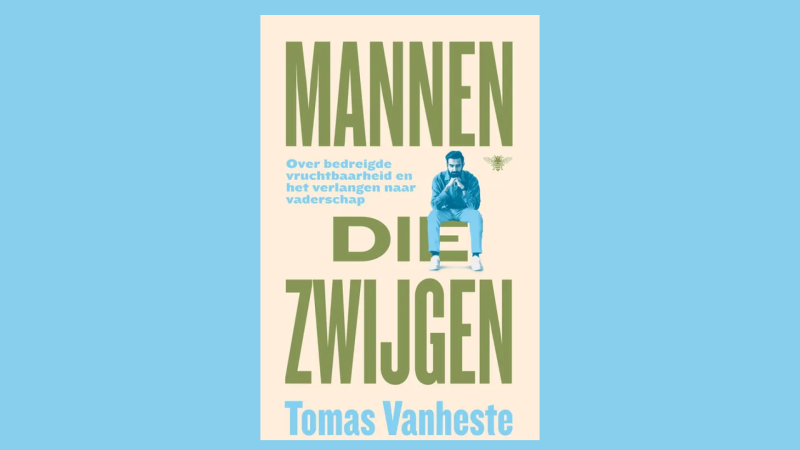
AMSTERDAM - What images are associated with fertility, masculinity and fatherhood in society? In 'Mannen die zwijgen' (Men Who Remain Silent), Tomas Vanheste explores the stigma attached to male fertility issues, examining possible causes and treatments.
SVALBARD - 'De laatste wildernis' (The Last Wilderness) takes you to two of the most extreme and inaccessible places on Earth: the North and South Poles, and the depths of the ocean.
BRUSSELS - This book features donor families of today. What is their story? How did they choose a donor? With what words do they talk about this at the kitchen table? And what reactions do they get from those around them? Children also have their say in this book. What are their needs, questions or wishes regarding their genesis?
BRUSSELS - Mythical as a dragon, but also real; people have become attached to an image of what might have been a dinosaur. A team of researchers set out to find the definitive evidence of what caused the end of the dinosaur era. One fine line in the rock bed contains knowledge down to the minute, from that fateful day, 66 million years ago.
ANTWERP - With the help of thousands of women, the microbiology lab at the University of Antwerp is going on a voyage of discovery into the underside of the female body: what microorganisms are found in the vagina, what are they doing there and what can we learn from them? The social relevance of this pioneering work is beyond question....
ANTWERP - Take a morning-after pill every day for two years. That was long the doctor's advice to girls who were 'too big'. The side effects, such as reduced fertility, were hardly taken seriously.
ZURICH/ALTMULTHAL-Fossils of dinosaurs are the new Picassos and Van Goghs. Millions are often given for precious skeletons. Such is the case for Trinity, the skeleton of a T. rex that Antwerp entrepreneur Fernand Huts bought a year and a half ago.
ANTWERPEN - Valère, Veerle Duflou's partner, chose to donate his body to science. Ten years after his death, Veerle wants to know what happens to those bodies. She goes to the Antwerp University anatomy lab and follows the people to whom these bodies end up.
BRUSSELS - Our meat consumption must go down, and to facilitate this, an army of producers is ready with alternatives. Some found inspiration in age-old recipes, others are reinventing meat altogether.
PUERTO BAQUERIZO MORENO - A visual documentation of the human history of Galápagos and its first inhabitants, who bore witness to the development of the last century.
ANTWERP - There are many forgotten disasters around the world, but one day they will be in the news again. Are we prepared for when the alert levels reach code red again?
COLOMBO - A Sri Lankan scientist, also a young mother, is trying to map the patterns of migrating coral larvae to protect the future of coral reefs and her people.
Pelvic pain is an umbrella term for pain in the tailbone, hips, buttock region, joints around the sacrum and pubic bone, but also embraces pain and discomfort in the vagina, vulva, perineum, uterus, ovaries, bladder, bowels and pelvic floor muscles.
MOL - Recent research shows that deep in our genes we are easterners. We are largely descended from steppe peoples who crossed into Europe five thousand years ago.
GALWAY/NUUK/REYKJAVIK - For months now, the North Atlantic has been plagued by extreme heat waves. The new high-tech research vessel the Belgica is sailing to the polar regions for the first time to document and investigate the effects of climate change in the oceans. Journalists Arno Van Rensbergen and Johannes De Bruycker went on board for a week.
BRUSSELS - Twenty years ago, the first SARS outbreak sounded the alarm. But Europe failed to prepare for the Covid-19 pandemic due to a lack of funding for drug research, and may still be unprepared for the next one, argue several prominent scientists interviewed by Stefano Valentino and Gian Paolo Accardo.
BRUSSELS - A good 15 percent of all spending within research and development in Flemish higher education comes from companies. Private companies finance research projects and doctorates and purchase licenses. But the line between close cooperation and conflict of interest between university and company is sometimes wafer-thin.
BOSTON/WASHINGTON D.C. - American Dreams is a journalistic multimedia story by Johannes De Bruycker. The project explores a wide range of philosophical and scientific issues, including the nature of reality, (lucid) dreams and nightmares, consciousness and trauma.