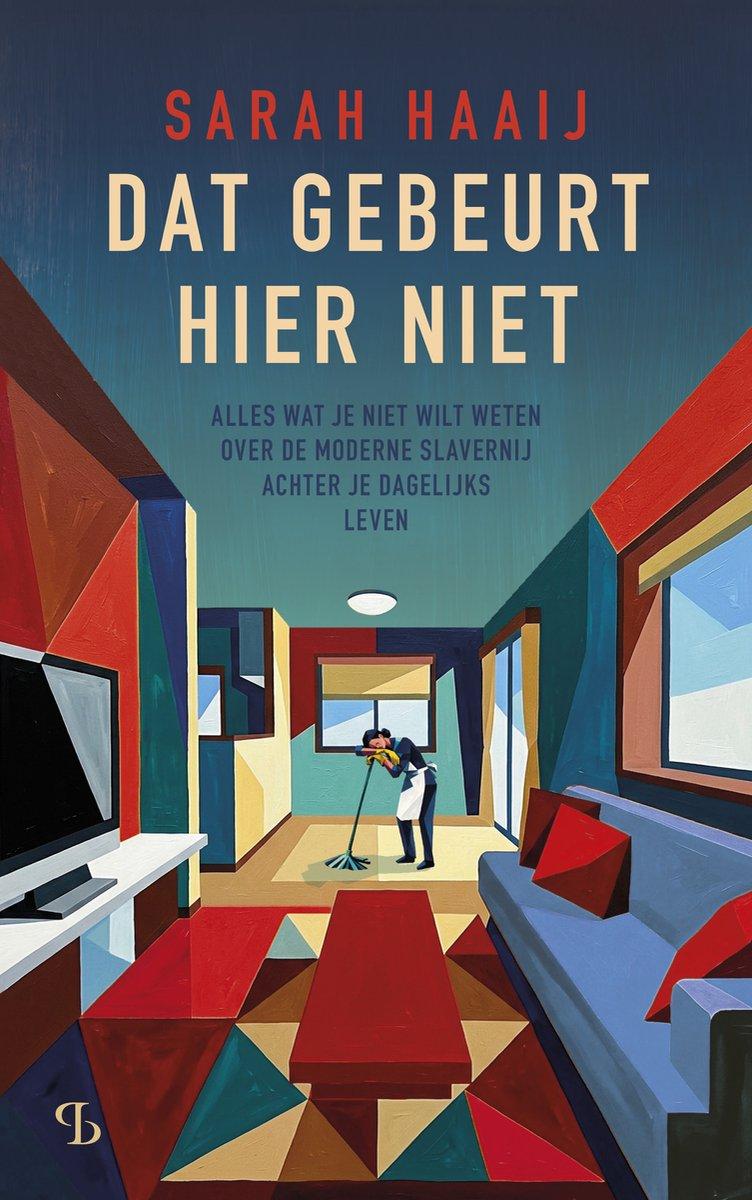
On 27 October, investigative journalist Sarah Haaij will publish Dat gebeurt hier niet – Alles wat je (niet) wilt weten over de moderne slavernij achter je dagelijks leven (It Doesn’t Happen Here – Everything You (Don’t) Want to Know About Modern Slavery Behind Your Everyday Life). The book is the result of a three-year investigation into the people whose work keeps our everyday lives running—and the structures that leave many of them vulnerable to exploitation.
The book builds, in part, on reporting that received support from Journalismfund Europe’s Modern Slavery Unveiled grant programme. In 2022, Haaij and Filipino journalist Michael Beltran received a grant to investigate the lives and working conditions of undocumented Filipino cleaners in the Netherlands. Their investigation, Brooms, brushes and a call for justice, documented an often invisible workforce facing underpayment, labour exploitation, sexual abuse, confinement and homelessness. The investigation was published in Vrij Nederland and other international outlets.
More recently, in 2025, Haaij received Journalismfund support through the Pascal Decroos Fund for Nothing But Victims: Modern Slavery Behind Cybercrime, an investigation into people trafficked and forced to work in scam centres in Southeast Asia. The reporting took her to the Thai-Myanmar border, where she followed the work of a rescue team helping people escape the centres. The investigation was published in Vrij Nederland in 2026.
A third Journalismfund-supported investigation, The Pains of Au Pairs Living with Foreign Families, adds another dimension to this body of reporting. Published in 2024, the investigation followed Indonesian au pairs in the Netherlands. It revealed how a programme presented as cultural exchange can leave young migrant women vulnerable to long working hours, low pay and exploitation. Together with Haaij’s other investigations into labour exploitation and modern slavery, it forms part of a broader body of reporting that looks beyond individual cases to the systems that allow exploitation to persist.
These investigations form part of a much broader body of reporting that Haaij brings together in her new book. Over three years, she spoke to more than 100 people and travelled from Portuguese blueberry fields and Dutch chicken factories to migrant camps, Ukrainian reception centres and the Thai-Myanmar border.
The result is a closer look at the people behind the statistics—and at the systems that make their exploitation possible.
One in ten workers in the Netherlands is a migrant worker, according to the book's publisher. Yet the public debate about migration often focuses on numbers rather than on the people behind them. Haaij's reporting instead follows the women and men who clean, care, cook, pick, pack, process, order and deliver the goods and services that are part of everyday life.
The long-term impact of investigative journalism
For Journalismfund Europe, the book is also an example of how the impact of investigative journalism can extend well beyond the original publication.
A grant may support a journalist in pursuing a specific investigation, but the reporting can continue to generate new stories, conversations and forms of public engagement long after the initial publication. In this case, investigations supported through the Modern Slavery Unveiled programme became part of a much broader journalistic inquiry into labour exploitation and modern slavery.
This is precisely why supporting independent investigative journalism matters: the impact of a grant does not necessarily end when a story is published. Strong reporting can become a starting point for further investigations, reach new audiences and contribute to a deeper understanding of complex issues.
Dat gebeurt hier niet is another step in that journey—bringing together years of reporting to make the people and systems behind modern slavery harder to ignore.
The book will be published by Uitgeverij Balans on 27 October 2026.